
Soil degradation, climate change, economic fragility and fragmentation – these are all challenges that rural areas in South West England are facing – and the cultivation of natural fibre crops, flax in particular, has been re-emerging as a practical and place-based response to these issues, rooted in the heritage and history of the region.
Back in 1789 the government paid farmers a bounty of 4d per Stone for flax that was “broken and prepared for market”. Since the mid 1800s growing flax and hemp has declined to the point where knowledge and know-how about Bast Fibre crops has largely been lost.
Over the past two years, Wessex Community Assets has been working with a group of West Dorset farmers to run a series of trials revisiting the fields and the skills involved in growing, harvesting, breaking and scutching flax to produce textile quality yarn.
Not only does flax offer value as a natural material, but it is a reliable break crop that fits well with agroecological rotations. It has little need for fertilisers or pesticides, improves soil structure and captures carbon from the atmosphere, holding great potential to support the transition to more regenerative agricultural systems.
WCA has been supporting local farmers experimenting with farm-scale growing and processing, and documenting and sharing the knowledge gained – from determining the ideal growing conditions, to experimenting with retting techniques. The weather, the soil, the timing, the humidity, the infrastructure – so many factors play into the quality of the fibre produced.
Learning from Growing
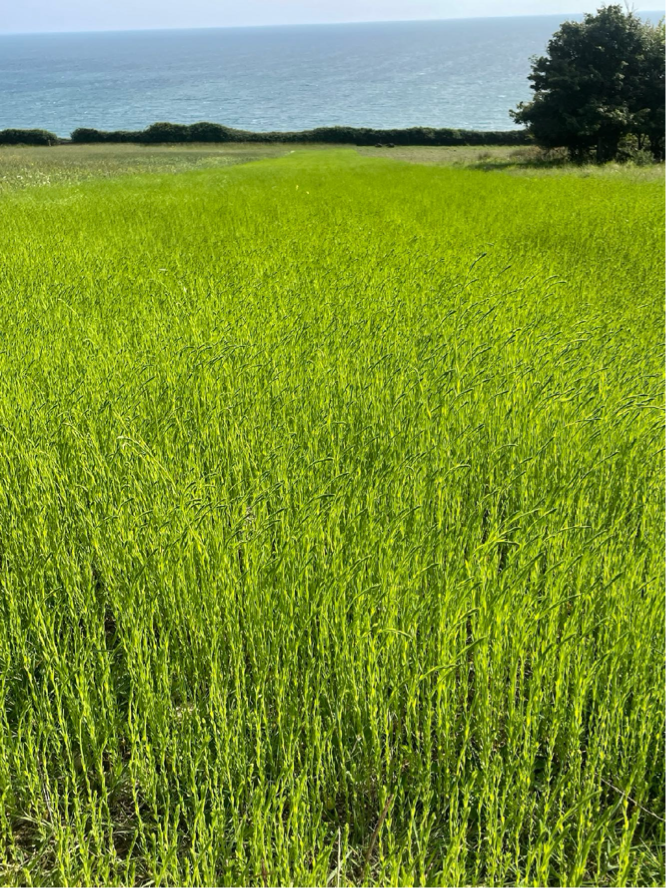
Covering a total area of 0.5 Ha, the field trials are helping to build and consolidate knowledge and experience about flax and its many uses.
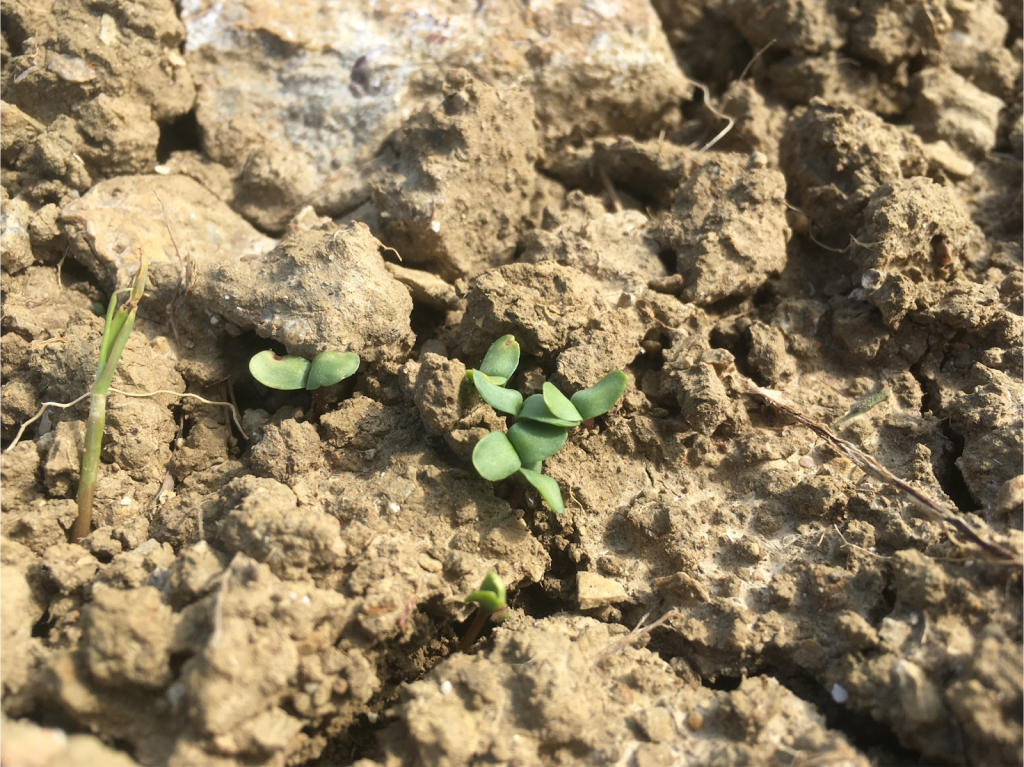
Despite a very dry growing season, early sowing and good soil preparation proved critical to a good crop of flax at Tamarisk Farm. Sowing earlier in the spring helped the crop capture the available soil moisture. In contrast, later sowings across the other farms were more affected by the dry conditions, leading to variable germination and crops that were shorter and thinner than expected.
Learning from Harvesting
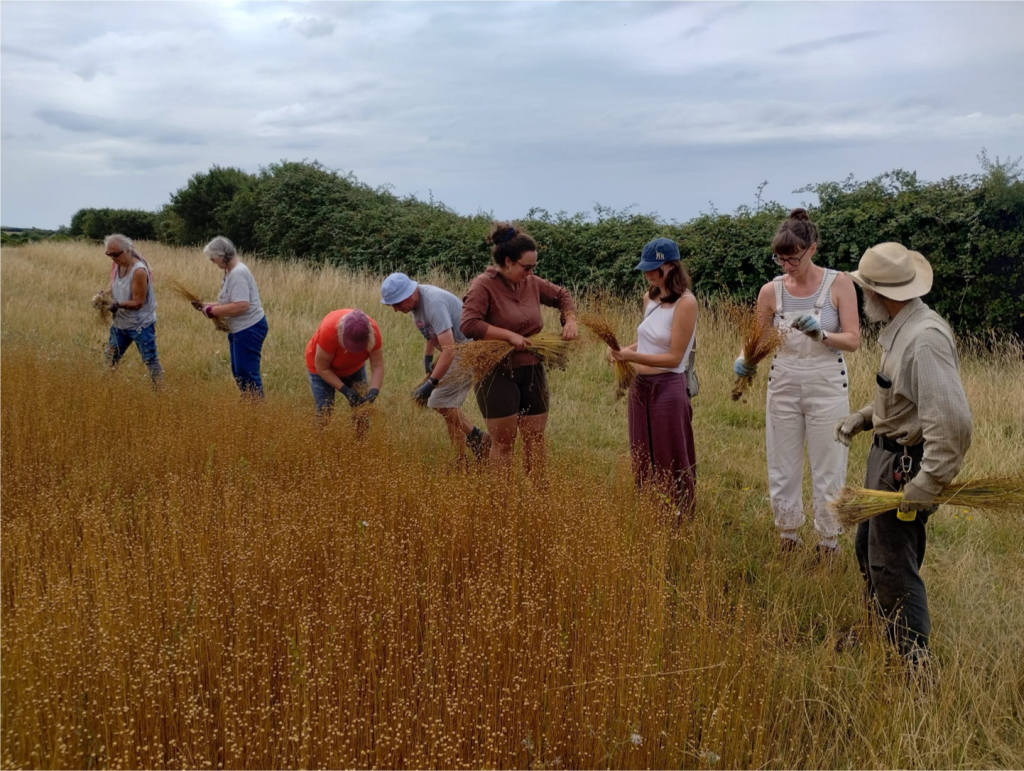
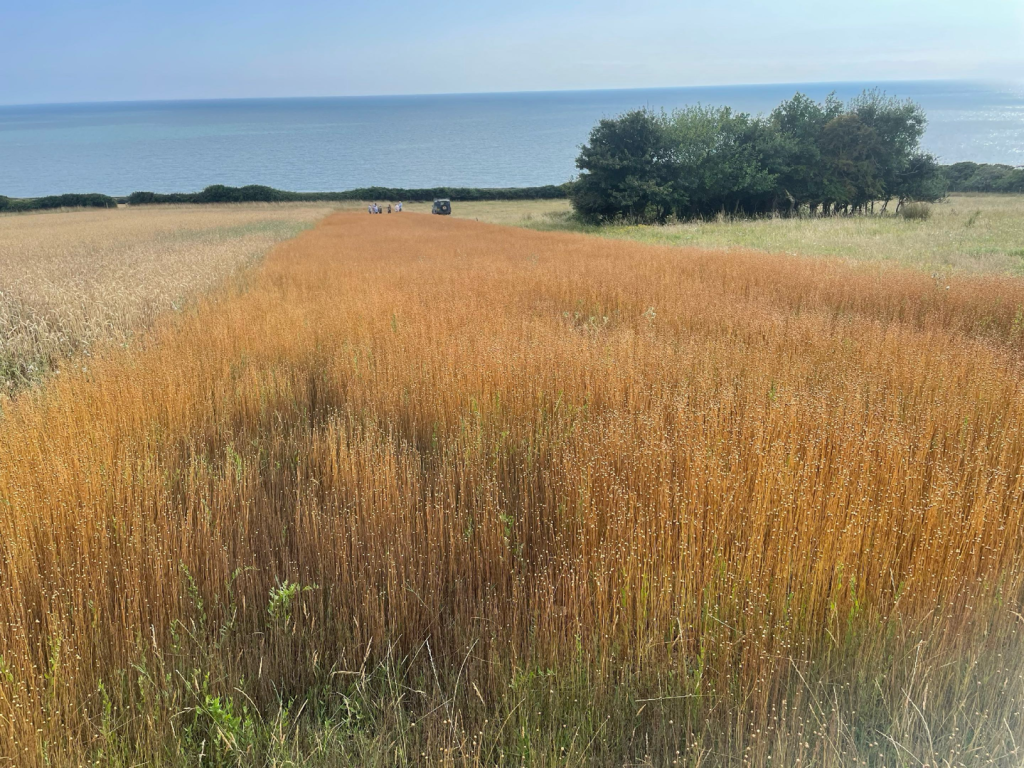
Rebuilding community connection to the land and the heritage of bio-materials is a core part of this project. In the absence of mechanised Flax Pulling equipment for harvesting, volunteer help becomes essential. Fortunately, these shared moments of work create opportunities for learning, knowledge sharing and reconnecting with traditional practices.
The timing of this stage proved critical, as we found that the late harvesting had an impact on the retting and processing of the flax. Relying solely on manual harvesting had limitations as about half the crop was not pulled. There is a need for mechanical equipment to improve harvesting efficiency and a need for infrastructure if flax is to become a practical break crop.
Learning from Retting
“Retting cannot be understood without the aid of practice” – John Claridge, 1794
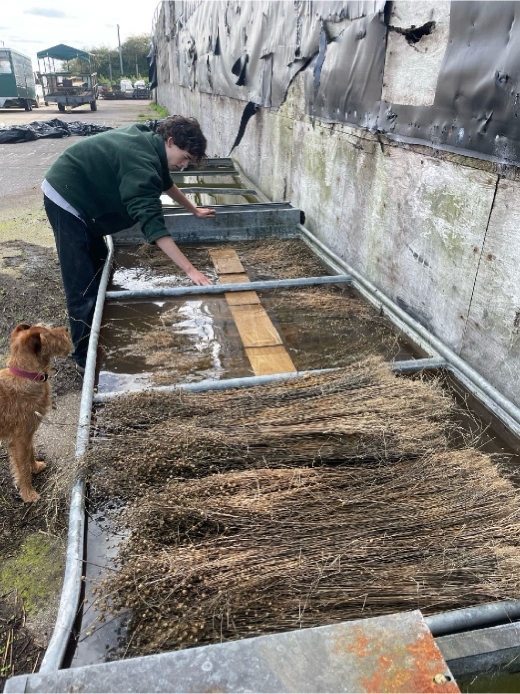
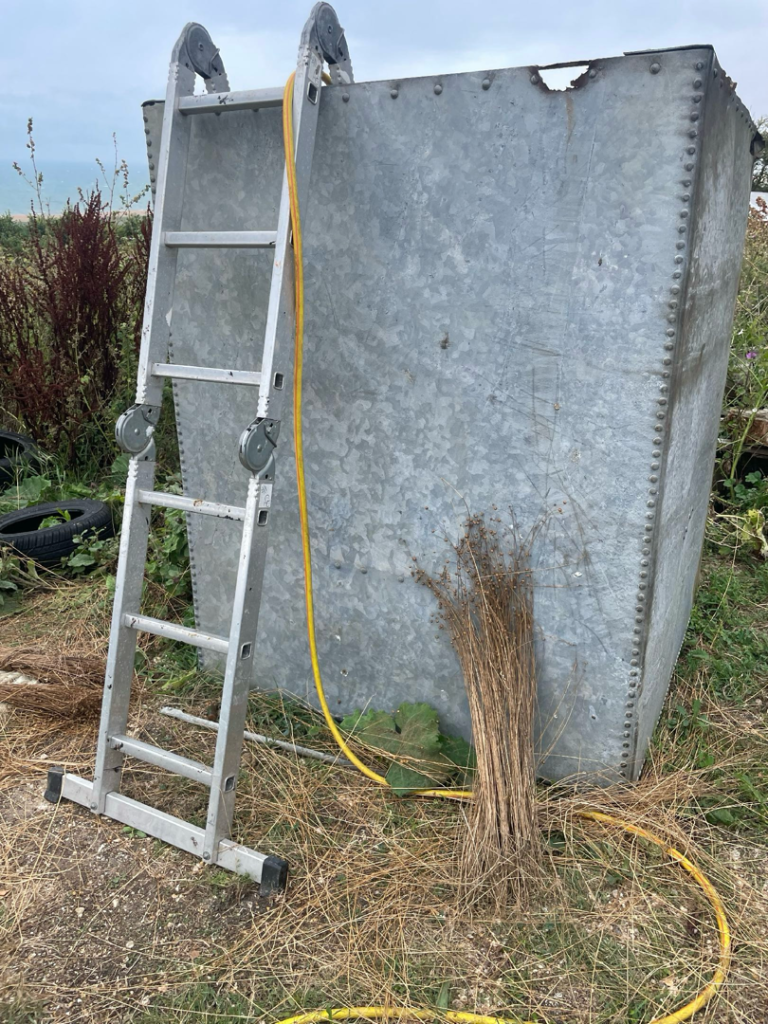
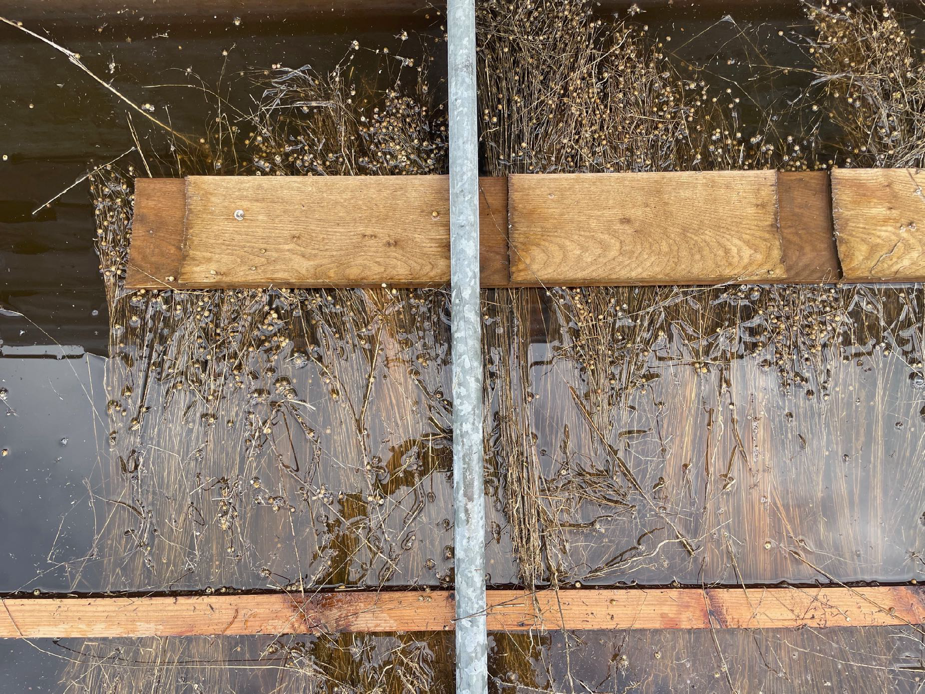
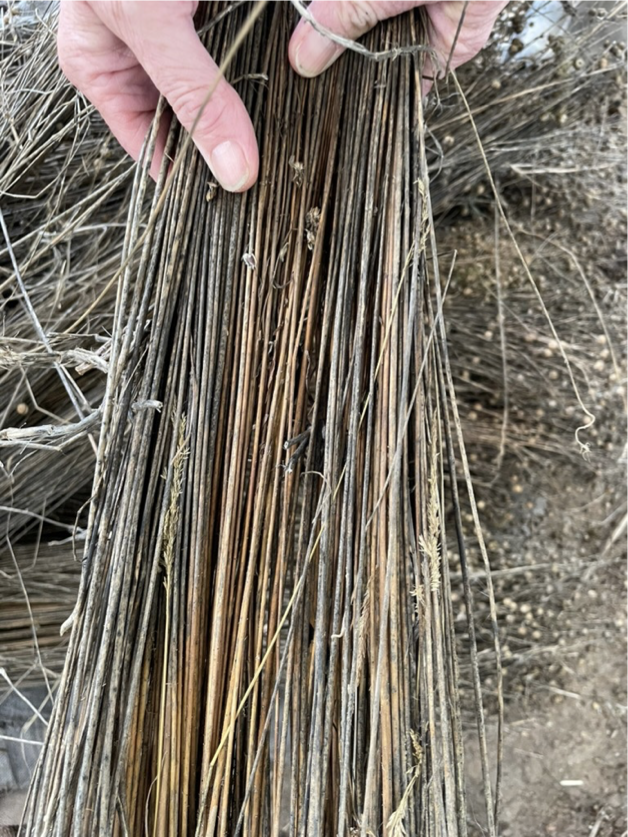
Following the harvest, flax is retted, a process that essentially involves soaking the crop in water to allow microorganisms to decompose the plant tissues, separating the fibre from the stem. It is a crucial stage that impacts on both the ease and quality of the yarn product. As John Claridge noted in 1794, retting is a process that requires practice! It is an art that needs to be learned through doing.
Multiple factors influence retting – there is a delicate conversation between the weather conditions, the water temperature, the crop thickness, the timing of pulling, the bacterial quality of the water – all of which shape and control the nature of the flax we are left with. Knowing when the retting is completed depends on touch, smell, sight and experience rather than fixed rules. Trial and error, experimentation and hands-on practice are foundational to building an understanding of the process.
Learning from Processing
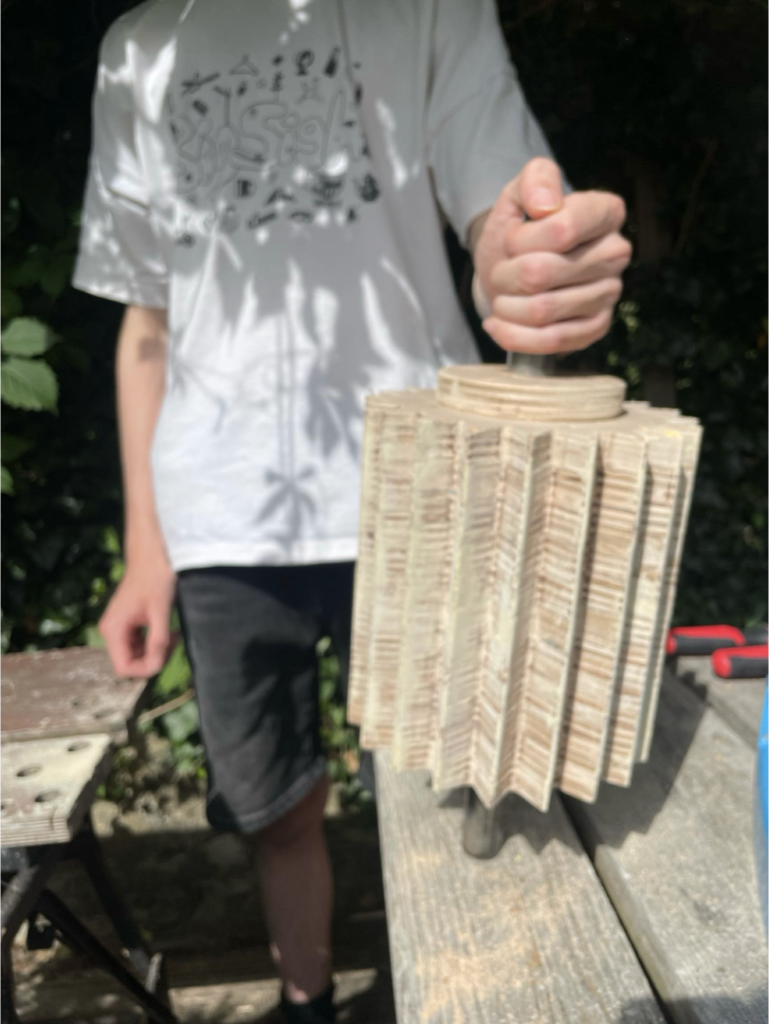
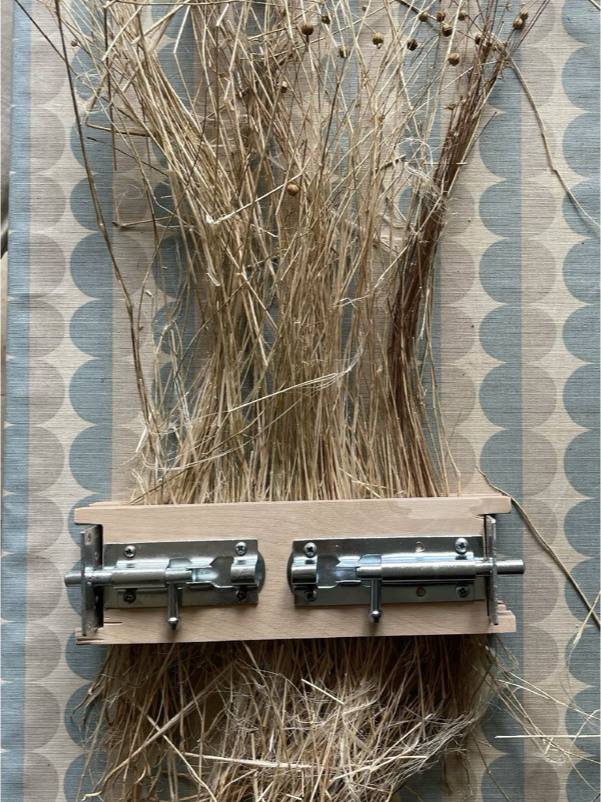
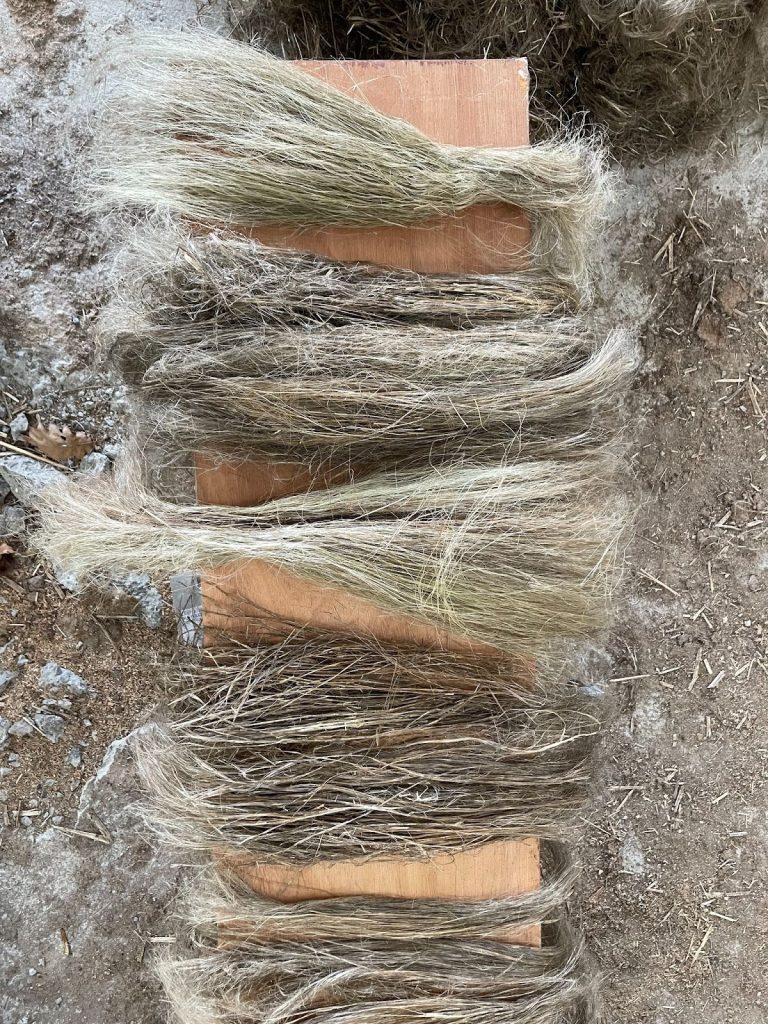
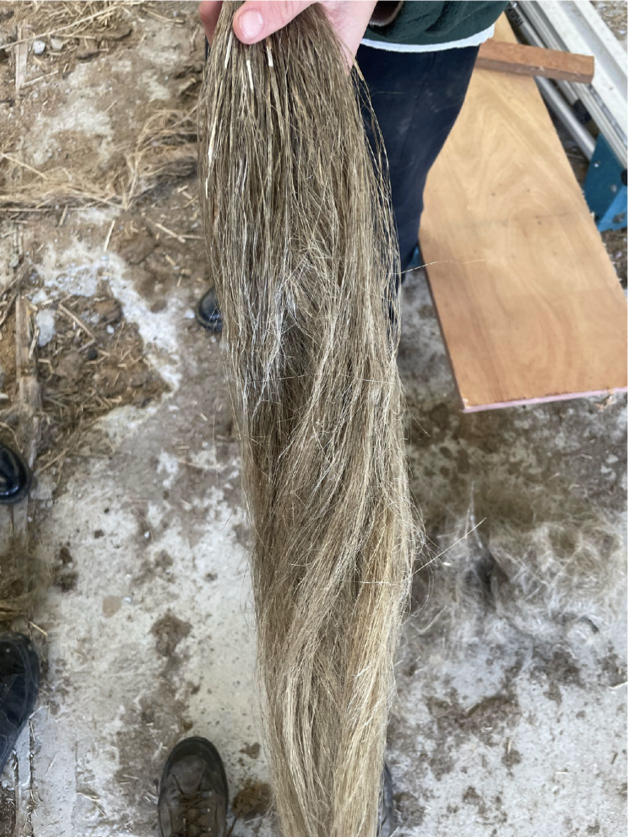
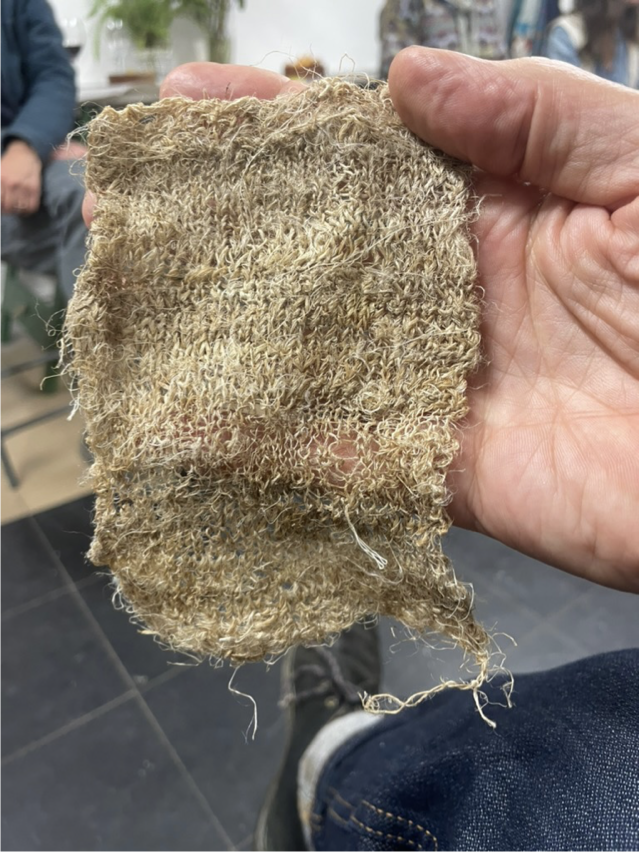
After the retting stage, the flax needs time to dry before starting on the processing. Processing involves three key steps: breaking, to fracture the woody core of the stem; scutching, where the flax is bashed to remove the woody core from the fibre; and hackling, where the fibre is combed, aligned and refined into a golden bundle in preparation for spinning.
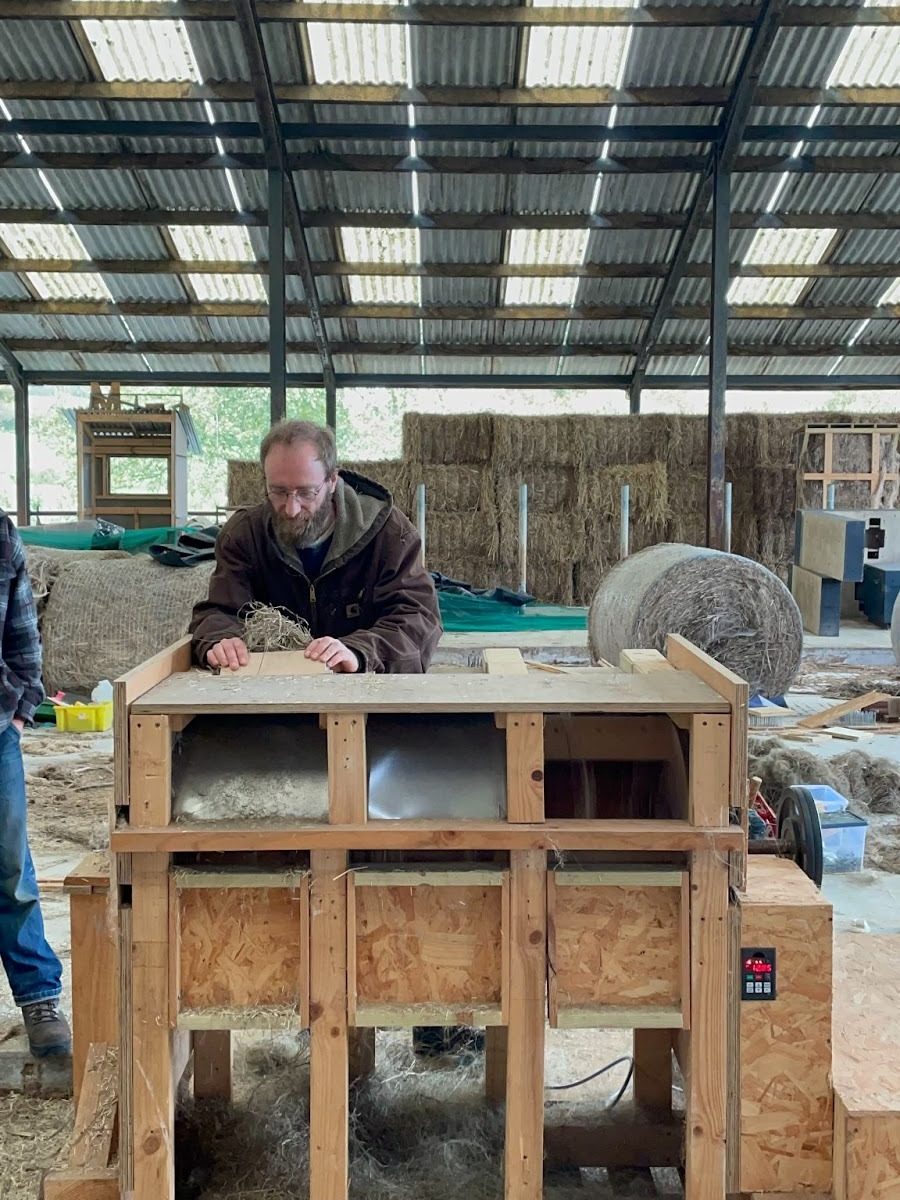
In 2025 WCA partnered with Fantasy Fibre Mill to build a low cost breaker and improve the scutching and hackling equipment, addressing problems encountered from the previous year. We then spent multiple days at Denhay Farm testing the processing machinery – tackling jammed breakers, experimenting with bundle sizes and beginning to get a sense of what flax processing at farm-scale would feel like.
There are fundamental gaps in the regional fibre ecosystem – the absence of local bioregional processing facilities, the lack of skills and knowledge required to work with the processing machinery and the limited and inconsistent demand for UK-grown fibre. These constraints underline the importance of developing distributed, cooperative enterprise models to rebuild a regenerative textile supply chain. Partnerships are essential for this.
Looking Ahead to 2026
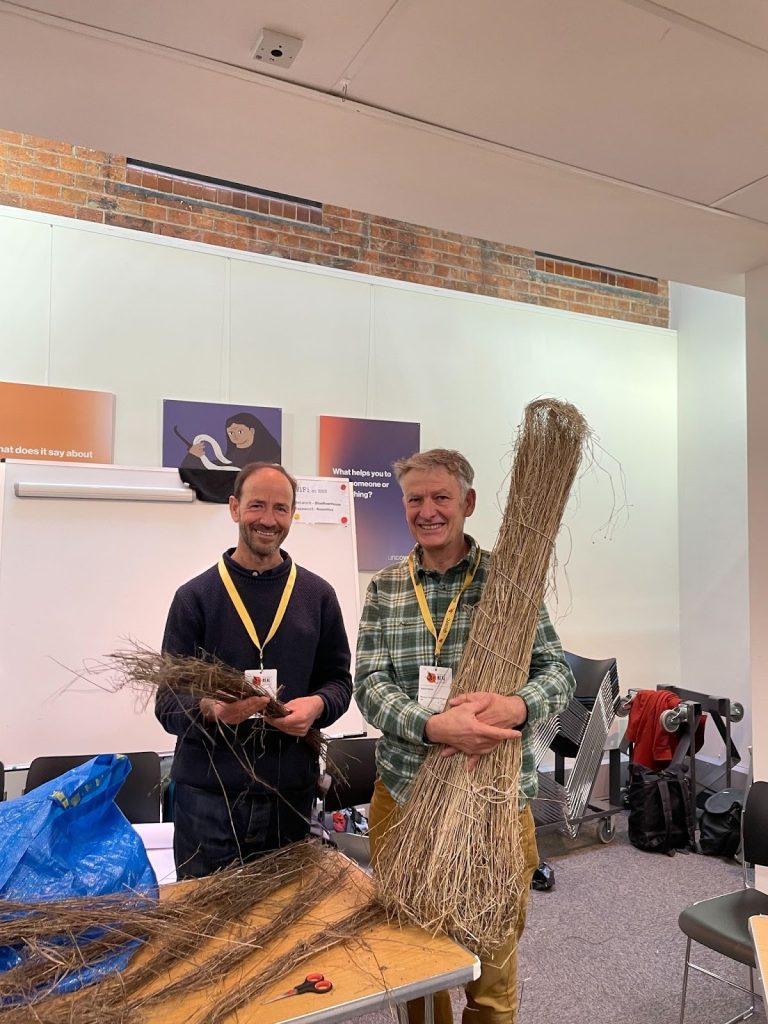
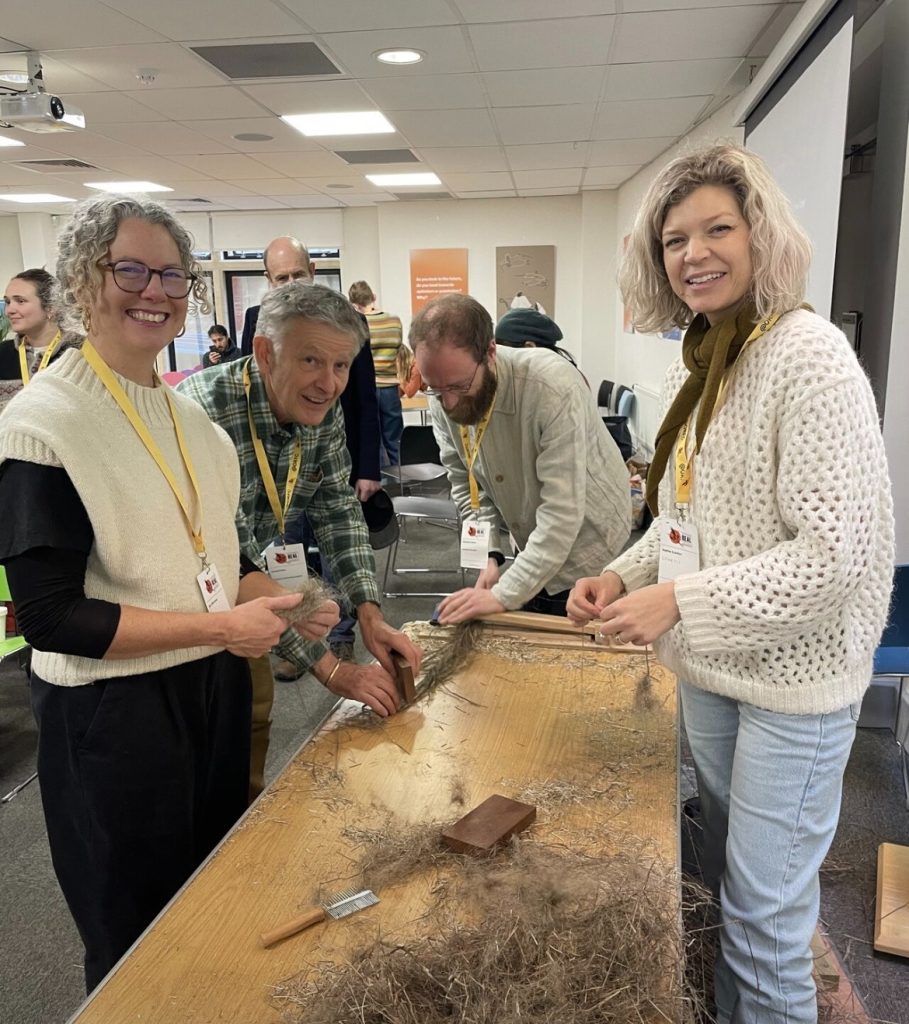
Together with Fantasy Fibre Mill and Liflad CIC, we shared the contents of this blog and our learnings from this project so far at a collaborative workshop at the Oxford Real Farming Conference in January. People from many different fields and backgrounds joined us, bringing their own perspectives and questions into the space, as we invited participants to try hand processing flax into fibre.
In 2026 we will continue to experiment with flax growing and processing. Equipment for breaking and scutching flax will move to Fivepenny Farm, where we hope to make the machinery available for farmers and small-holders to use. Integrating flax growing and processing into the new Land Skills Hub will help push experimentation, collaboration and knowledge exchange.
Alongside these practical changes, we are also working on a Heritage Lottery bid, with an update on this expected in February. This proposed project would build upon the momentum of the work we have done, helping local communities to engage and reconnect with the history of flax growing, fibre making and heritage craft as a practice that can be relearned, adapted and carried forward into the future.
Previous Reports: